SeaShore House OpticalEye care & eyewear

SeaShore House Optical Demo

Watch Light Come Into Focus

Light travels in straight lines until something bends it. That sentence is easy to read and hard to picture, so this demo puts it in front of you: parallel rays, a glass lens, and one bright point where they meet.

Book an Eye Exam Explore the Other Demos

A Hero That Explains Something

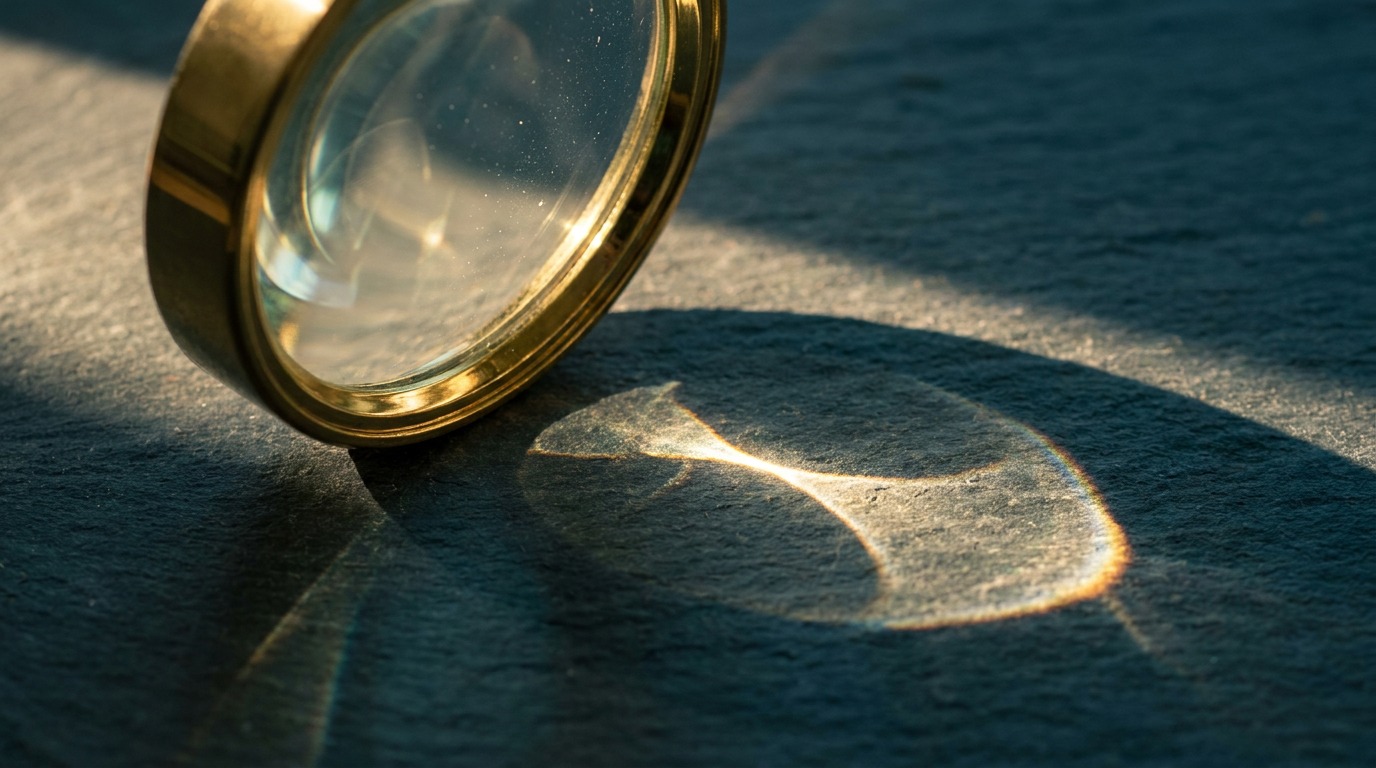
Most hero sections show a photograph and hope the visitor keeps reading. This one shows a physical idea: parallel light arrives, a lens bends it, and every ray lands on the same point. Move your pointer across the hero and the bench leans with you.

That is the whole trick behind a pair of glasses, and it is the reason a lens has to be measured to your eye rather than picked off a shelf. Depth and motion buy comprehension: a scene that converges skips the step where a patient has to translate a diagram into their own vision.

A Demo, Not a Diagnosis

What you see is a model of an optical bench, drawn to explain how light behaves. It is not your prescription, it measures nothing, and it cannot tell you anything about your vision. Questions about your eyes belong in an exam room.

What Is Rendering in That Hero

Three unglamorous ideas do all the work, and each one is visible if you look for it.

Geometry, Not a Picture

The lens is a real shape, turned on a lathe from its own profile, and every ray is a line bent at the glass and sent to the focus. Because it is geometry, the bench can lean toward you and the convergence stays true at any size.
Light From Three Sides

A cool light sits off to the left, a warm one to the right, and a soft ambient fill keeps the shadows readable. A bloom pass then lets the brightest pixels spill, which is what makes the focal point look lit rather than painted.

Motion You Can Refuse

A pulse of light runs the length of the rays on a loop and the bench leans toward your pointer. If your device asks for reduced motion, the animation never starts and the still photograph simply stays. Nothing on this page depends on the movement to make sense.

Why a Lens Has to Be Measured

Patients arrive with a sentence, not a diagnosis. Reading has gone soft. Signs flare at night. Headlights smear. Each of those points at how light is landing inside the eye, and each is easier to discuss once the visitor has watched rays converge.

The exam room is still where answers come from. A good page does a smaller job: it gives a patient the vocabulary to describe what changed and the confidence to book the visit. A lens that visibly bends light does that job better than a paragraph about refraction.

See What an Eye Exam Covers

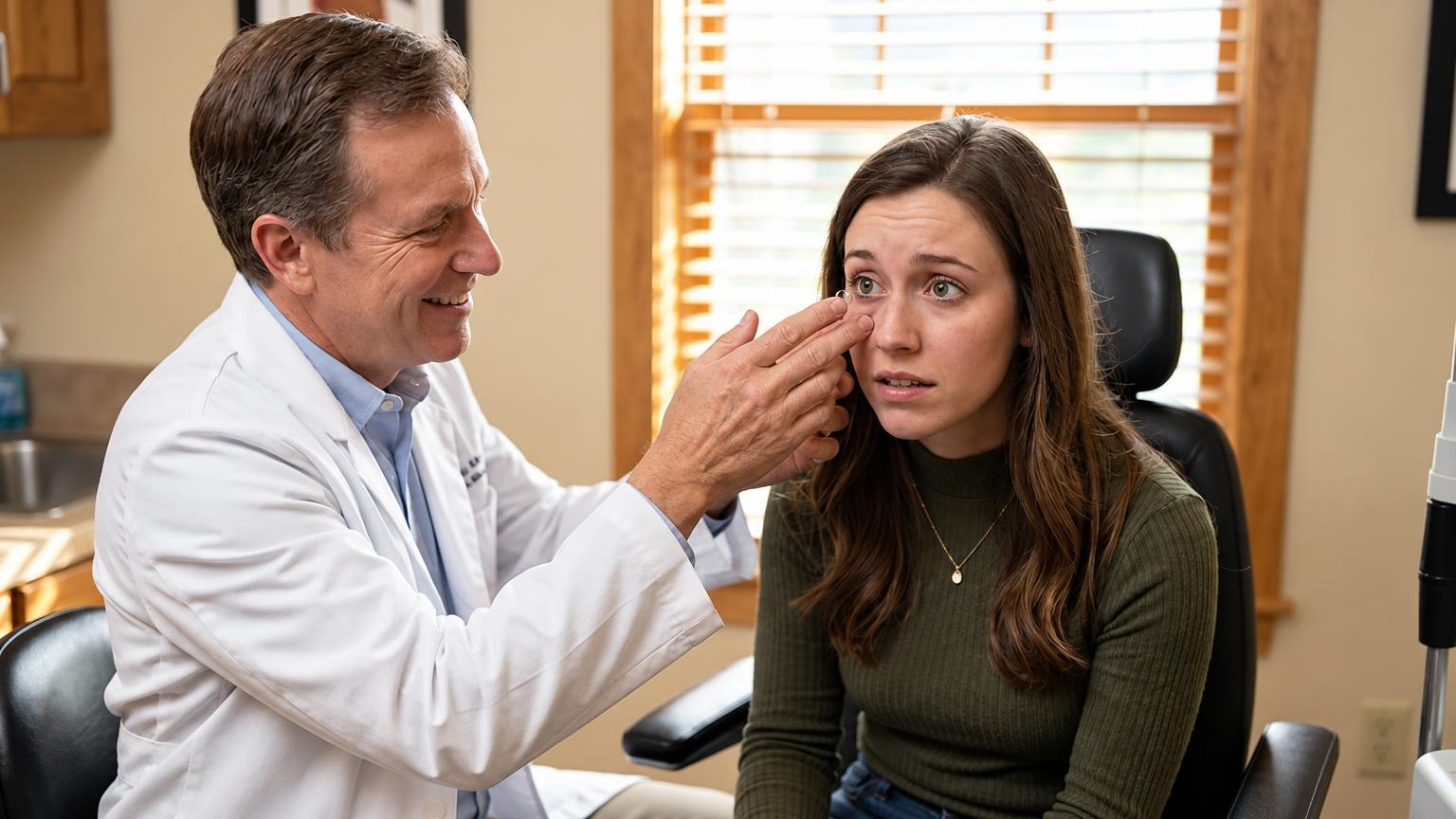
Optometrist examining a patient's eye with a slit lamp
The exam itself stays simple and hands-on. The website only has to get a patient to the chair.

How This Hero Is Put Together

Nothing here is exotic. The page loads a small 3D library from a public content network, builds the bench in about two hundred lines of script, and keeps the photograph as its first layer.

  1. The photograph loads and paints immediately, so the hero is useful before any script runs.
  2. The 3D library arrives in the background. If it is slow, blocked or unavailable, the photograph simply stays.
  3. Once the scene starts, the canvas fades in over the photograph and the light begins its run along the rays.
  4. The animation stops when the hero scrolls out of view or the tab is hidden, so a phone is not rendering a scene nobody is looking at.

That last point matters more than the visual effect. A hero that drains a battery is a hero a practice should not ship.

Where a Hero Like This Earns Its Place

Movement attracts attention, so it belongs where attention is worth spending and nowhere else.

  • The homepage, where a visitor decides in seconds whether to keep reading.
  • A surgical or technology page, where a procedure or device is genuinely hard to describe in words.
  • An educational page that explains how vision works, where a converging beam beats a flat diagram.

It does not belong on a page about hours, insurance, policies or a single frame. Those pages have one job, and a patient wants the answer, not a scene.

The Limits Worth Knowing

A 3D scene costs more to build and to load than a photograph, it needs a fallback for older browsers and for visitors who turn off motion, and it should never be the only way to reach information. Used deliberately, on one page, it is worth all of that.

Start With the Eyes, Not the Effects

This demo exists to show what a page can do, not to sell you a spinning logo. The useful part is the sequence: understand what a patient is describing, connect it to how their eyes focus light, and offer the visit that answers it.

Your eye care team can help with the second half. Book an appointment at the office closest to you, and bring the question you have been putting off.

Book an Eye Exam Back to All Demos

Your Next Step: Choose an Office

These interactive tools are educational demonstrations, not diagnoses, benefit guarantees or prescriptions. An exam and a conversation with the team help you choose care that fits.

Explore All 10 Demos