SeaShore House OpticalEye care & eyewear

SeaShore House Optical

Lens and Lifestyle Builder

Book a Visit ↗

Build a Lens Plan Around Your Week

Question 1: how long are you on a screen? Question 2: do you drive after dark? Question 3: do you play a sport? Question 4: which age group are you in? Those four answers shape what most people actually need from their glasses and their contact lenses.

Move the slider, tick what applies, and choose from the menus. Suggestions appear below as you change an answer, and every one comes with a plain explanation of what it can and cannot do.

Nothing you enter is sent anywhere, and none of it is a prescription. It is a set of questions to bring to your next visit.

Your Lens and Lifestyle Check

Answer for a typical week, not for your best or worst day. You can change anything and the suggestions will follow.

Screen time on a typical day 6 hours

Count work, study, phone, tablet and TV time together.

Where your day takes you
Age group and near vision

Suggestions for Your Answers

Suggestions appear here once the builder has your answers.

Blue-Light Filtering Lenses

Suggested when you spend six or more hours a day on screens.

Blue-light filtering lenses block part of the highest-energy visible light that reaches your eyes, the light screens and LED lighting give off. Some wearers say a screen feels less tiring by the end of a long day.

Good to know: research has not shown that screen blue light damages the eye, and these lenses are not a cure for digital eye strain. Screen strain usually comes from hours of close focus, a dry eye surface and glare. A filter is one comfort option, not a fix on its own.

Anti-Reflective Coating

Suggested when you drive after dark or spend long hours on screens.

An anti-reflective coating is applied to the lens to cut the reflections that bounce off its front and back surfaces. Those reflections are what you notice as glare from headlights, streetlights and monitors, so reducing them can make low-light vision feel cleaner.

Good to know: a coating may reduce reflections and glare, but it does not guarantee safe night driving. How well you see at night depends on your prescription, your eye health and the road. Keep your lenses and windshield clean, and see us if oncoming headlights have started to bother you.

Photochromic, or Light-Adjusting, Lenses

Suggested when your day moves between indoors and bright outdoor light.

Photochromic lenses darken when ultraviolet (UV) light reaches them and clear again indoors, so one pair of glasses can cover a lunchtime walk and an afternoon at a desk.

Good to know: a car windshield blocks most UV, so these lenses darken far less inside a vehicle than they do outdoors. If you want dependable sun protection while driving, a separate pair of prescription sunglasses does the job better.

Progressive or Multifocal Lenses

Suggested from around age 40 and up, or when close work is getting harder.

Progressive lenses carry distance, middle and near powers in one lens without the visible line of a bifocal. They suit presbyopia, the age-related change that makes reading and phone text harder to focus.

Good to know: progressives need a current prescription and a careful measurement of where your eyes sit in the frame. Not everyone adapts easily, and some work is better served by a dedicated pair for the desk or the computer. The optical team can tell you which design suits your day.

Daily Disposable Contact Lenses

Suggested when you play a sport, stay active, or already wear contact lenses.

A fresh sterile pair every morning and nothing to clean at night. Daily lenses suit sport, travel and occasional wear, and they remove the storage routine that trips up reusable lens wearers.

Good to know: contact lenses need a fitting first, and the right lens depends on your prescription, your tear film and the shape of your cornea. Our practice record lists 36 contact lens products we carry, including the daily options. See what we actually carry. Never buy lenses without a current prescription.

Safety-Rated Sport Frames

Suggested when you play a sport or take on active hobbies.

Impact sport needs more than a tough pair of everyday glasses. Sport frames hold the lens closer to the eye, stay put through sweat, and can be made in impact-resistant material. Safety-rated eyewear is tested to a protection standard, so it is the right choice for ball sports, racquet sports, cycling and workshop tasks.

Good to know: everyday glasses and fashion sunglasses are not safety eyewear, and a standard frame does not protect the eye from impact. Ask which frames are rated for your sport before you buy.

Sport and safety names in our frame list:

  • Wiley X
  • Nike Eyewear

Confirm with the team which specific models are rated for your activity.
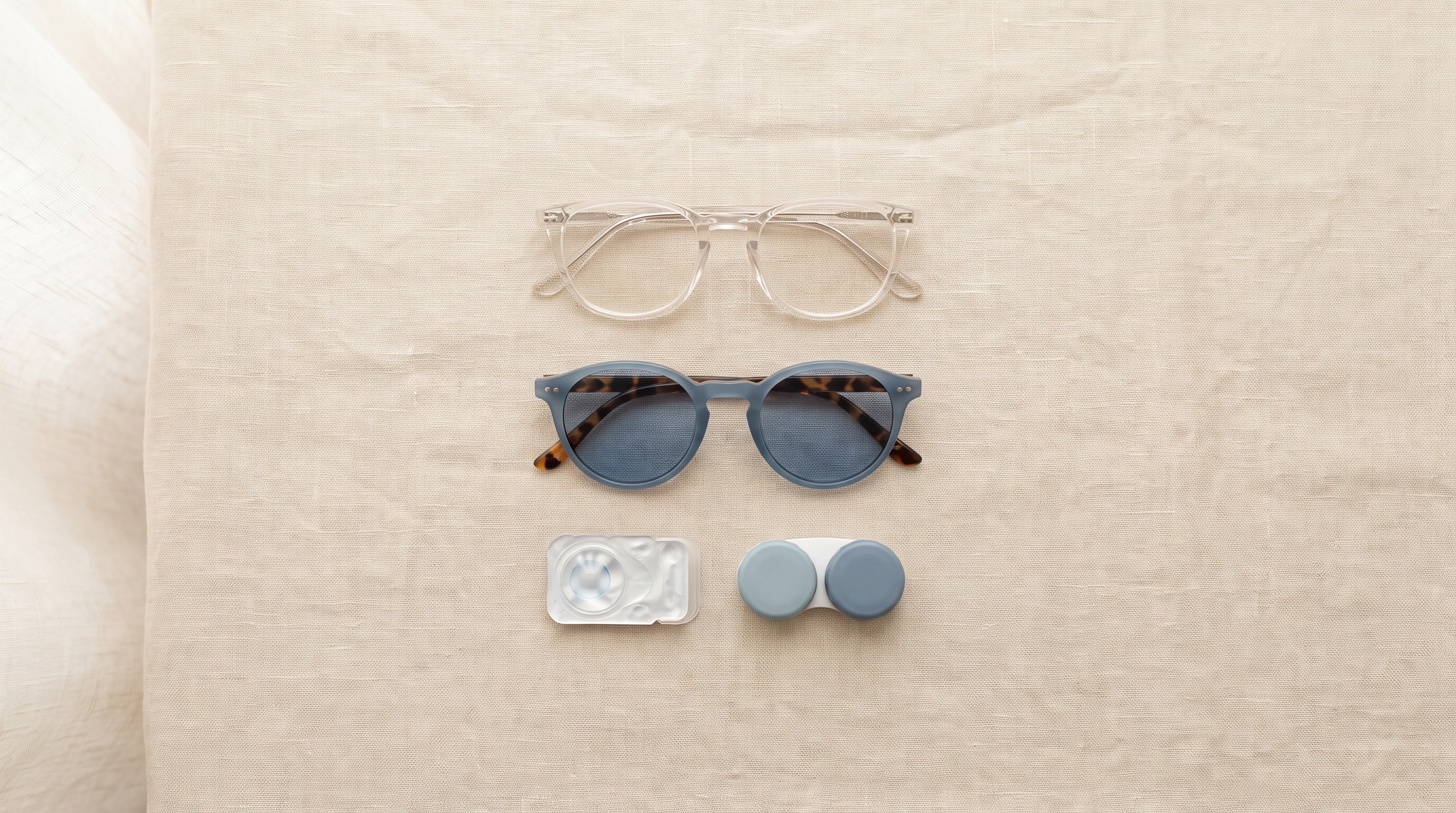
What We Actually Carry

This section is read from the practice's own record, so it shows only what the practice lists. Nothing here is a recommendation on its own, and availability can change between visits.

Contact Lens Products

Our record lists 36 contact lens products, covering daily, reusable, toric, multifocal and color options. Which one suits your eyes is decided at a fitting, not from a list.

  • FreshLook® COLORBLENDS
  • FreshLook® VT
  • ACUVUE® 2
  • AIR OPTIX® for Astigmatism
  • AIR OPTIX® COLORS
  • DAILIES® AquaComfort Plus
  • DAILIES TOTAL1® Multifocal
  • DAILIES TOTAL1® Water Gradient
  • FreshLook® COLORS
  • DAILIES® AquaComfort Plus Multifocal
  • AIR OPTIX® NIGHT & DAY AQUA
  • DAILIES® AquaComfort Plus Toric
  • PRECISION7®
  • 1-DAY ACUVUE® DEFINE®
  • 1-DAY ACUVUE® MOIST Multifocal
  • ACUVUE OASYS® 2-Week
  • ACUVUE OASYS® for PRESBYOPIA
  • FreshLook® DIMENSIONS
  • Precision1®
  • PRECISION1® for Astigmatism
  • AIR OPTIX® AQUA
  • ACUVUE® Oasys Max 1-Day
  • Dailies Total1®
  • ACUVUE® OASYS 1-DAY with HydraLuxe™ TECHNOLOGY for ASTIGMATISM
  • AIR OPTIX® plus HydraGlyde
  • Dailies Total1® for Astigmatism
  • AIR OPTIX® plus HydraGlyde Multifocal
  • AIR OPTIX® AQUA Multifocal
  • ACUVUE® OASYS MAX 1-Day MULTIFOCAL
  • TOTAL30® for Astigmatism
  • DAILIES TOTAL1® for Astigmatism
  • DAILIES TOTAL1® Daily Disposable Contact Lenses
  • TOTAL30®
  • TOTAL30® Multifocal
  • DAILIES® COLORS
  • FOCUS® DAILIES

Read about contact lens options

Frame Brands

Our record lists 396 frame brands, from everyday frames to designer names and sport eyewear.

Sport and safety brands among them:

  • Wiley X
  • Nike Eyewear

Browse the designer frame brands we carry

Coating and Progressive Lens Brands

Our patient record does not list coating or progressive lens brand names, so this page does not invent any. Anti-reflective, blue-light filtering, photochromic and progressive designs are chosen at your fitting, and the optical team will tell you exactly which brands and options they stock that day.

What the Evidence Says

Each suggestion above has a limit as well as a benefit. These notes are the ones worth reading before you decide.

Blue Light and Screens

There is no established evidence that blue light from screens damages the eye, and blue-light filtering lenses are not a proven cure for digital eye strain. Comfort measures, screen breaks, lubrication and a current prescription often matter more.

Anti-Reflective Coating

A coating may reduce reflections and stray light, which some drivers find helpful. It is not a guarantee of safe night vision. Untreated eye health problems, an out-of-date prescription and a dirty windshield all matter at least as much.

Photochromic Lenses

They respond to ultraviolet light. Because a windshield filters most UV, they darken only partly in a car. They are not a replacement for prescription sunglasses while driving.

Progressive Lenses

Progressive designs suit presbyopia, but suitability, adaptation time and the best design for your work vary from person to person. They are made to a prescription, so a current exam comes first.

Safety and Sport Frames

Everyday glasses are not safety eyewear. Rated sport and safety frames are tested to a standard, and the rating is per model rather than per brand. Ask before you buy if protection is the point.

Suitability, Not Prescription

This builder sorts options; it cannot examine an eye or write a prescription. It does not tell you which lens, coating or contact lens fits you. That answer comes from an eye exam and a fitting with the team.

If a suggestion surprised you, or if something on this page tells you your eyes have changed, the next step is an exam rather than a purchase.

Your Next Step: Choose an Office

These interactive tools are educational demonstrations, not diagnoses, benefit guarantees or prescriptions. An exam and a conversation with the team help you choose care that fits.

Explore All 10 Demos