Comprehensive Eye Exams
For blurry distance vision, trouble reading, or the headaches that build through a long screen day.
Start here if it is urgent
Some eye symptoms need care now, not a questionnaire. If any of these happens to you, or to someone with you, stop and get help today. Do not fill in a form or leave a voicemail and wait.
Chemical splash: flush the eye with clean water straight away, then call 911 or go to the nearest emergency department.
Sudden vision loss, severe pain, flashes, floaters or a curtain: call 911 or go to the nearest emergency department. These can threaten your sight, and time matters.
Urgent but not an emergency: during office hours, call the office nearest you so the team can advise you directly.
Nothing here fits the red flags above? Then pick the answer that sounds most like you, and say how long it has been going on. Two taps and you get a plain-language explanation, a link to the service page that fits, and a way to book.
This guide organizes your questions, it does not diagnose you. Only an eye exam can tell you what is going on.
Step 1 of 2
Dry eye rarely shows all its faces at once, so a short check can be useful before you come in. Tick the statements that sound like your eyes, then add your details if you would like a call back. Your ticks travel with the request so the team can see what you noticed.
Bring the answers you just gave and anything that helps: your current glasses, your contact lens details, a list of the medicines you take and the name of your vision plan.
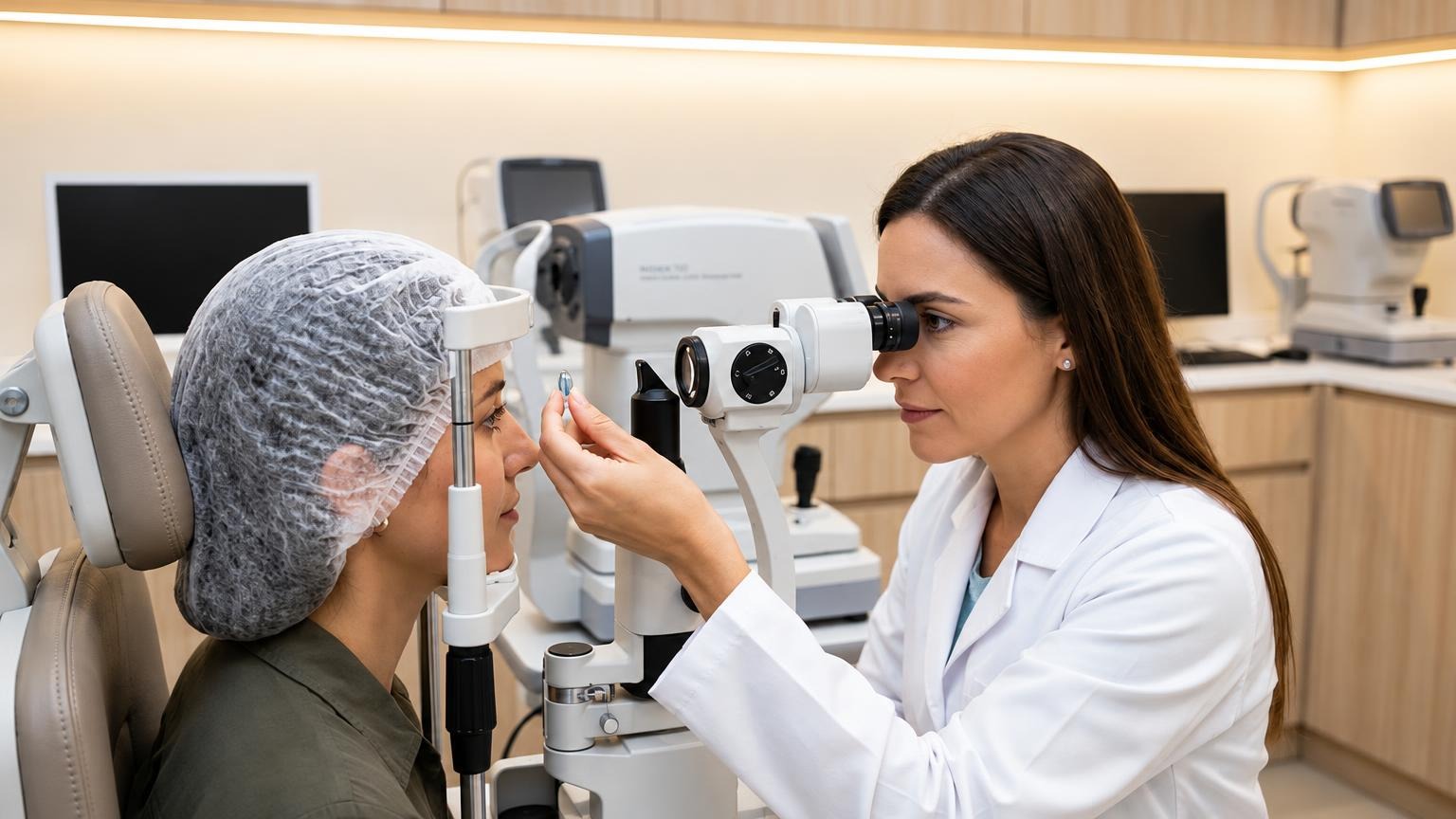
Your optometrist asks about your symptoms and your daily routine, then examines your eyes. Depending on what you describe, that may include checking your prescription, how your eyes focus and work together, your tear film, and the health of the front and back of the eye. Drops that widen your pupils may be used, which can blur close vision for a few hours.
You leave with a clear explanation of what was found and what the sensible next steps are, whether that is a new prescription, a dry eye plan, a change to your lens routine or a referral.

Every result in the guide points at a page the practice already keeps up to date. You can go straight there instead.
For blurry distance vision, trouble reading, or the headaches that build through a long screen day.
Dry eye, eye strain and the everyday conditions that make eyes feel tired, itchy or uncomfortable.
For gritty, burning or fluctuating vision, with care aimed at the part of your tear film that needs help.
For lenses that dry out, itch or blur by the end of the day, including a fresh look at fit and material.
For a child who rubs their eyes, sits close to the screen, or needs more than a school screening.
For anyone weighing up laser vision correction and wanting the consultation explained first.
The guide asks about what you notice and what it might be worth reading next. It is built from general eye care information, and it is the same for every visitor with the same answers.
It cannot diagnose you and it does not recommend a treatment. Two people with dry, gritty eyes can have very different causes, and only an exam with your history and your eyes in front of the optometrist can tell them apart. If your answers include anything urgent, treat the red flags at the top of this page as the priority.
If you would rather skip the questions, that is fine. Choose your office below and book a visit, or call the office nearest you.
These interactive tools are educational demonstrations, not diagnoses, benefit guarantees or prescriptions. An exam and a conversation with the team help you choose care that fits.
Rayville, New York
Book at SeaShore HouseChoose this office in the booking page.
Chicago, Illinois
Book at SeaShore FoxfireChoose this office in the booking page.