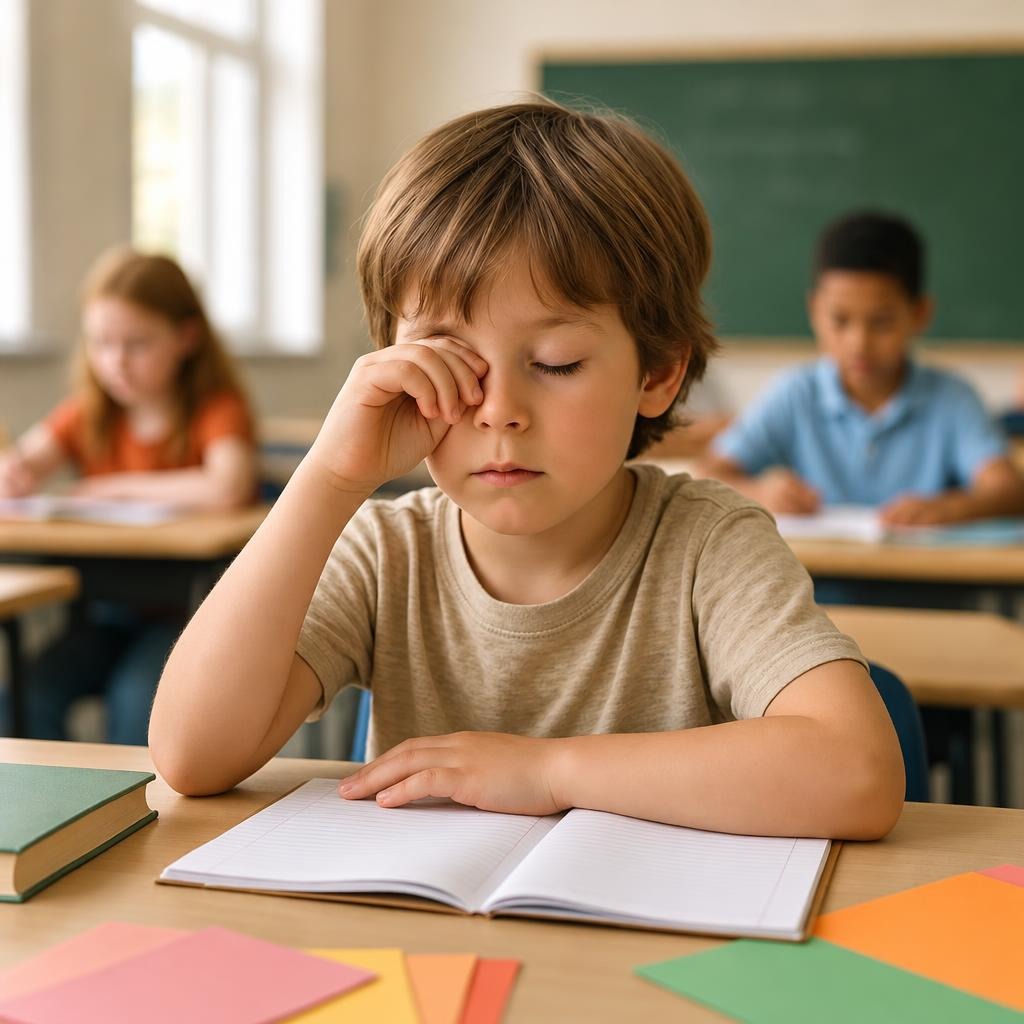
Before the school year begins, learn how a comprehensive eye exam can spot childhood myopia, which changes deserve attention, and how a personalized care plan may help slow progression while supporting comfortable vision in class.
The board may look blurrier this fall even if your child hasn't mentioned a problem. A comprehensive pediatric eye exam before school starts can detect myopia early, check eye health, and help you plan care before classroom demands reveal a struggle.
Children often assume everyone sees the way they do. They may move closer to the television or copy from a classmate rather than tell you they can't see clearly. At SeaShore House Optical, we help families connect those everyday changes with a longer-term plan for children's vision.
Why a School Screening Isn't a Full Eye Exam
A school vision screening can flag some problems, but it doesn't provide the same information as a comprehensive pediatric eye exam. A child may pass a screening and still have a concern that needs attention.
- School Vision Screening
- A brief check that often focuses on how clearly a child sees at a distance. A referral means your child needs further evaluation.
- Comprehensive Pediatric Eye Exam
- An age-appropriate assessment of vision, prescription, focusing, eye alignment, how the eyes work together, and eye health. The doctor chooses tests based on your child's needs.
Clear vision supports tasks such as reading, following a lesson, and shifting attention between a book and the board. An exam can identify vision barriers, though glasses or myopia treatment cannot promise better grades or resolve every learning difficulty. Our comprehensive eye exams page explains the broader role of regular eye care.
What Is Childhood Myopia?
Myopia, or nearsightedness, makes distant objects look blurry. It often develops when the eye grows too long, so light focuses in front of the retina, the light-sensitive tissue at the back of the eye. A child may see a book clearly but struggle to read the classroom board.
Myopia has become increasingly common and often progresses during the school years. The National Eye Institute's myopia guidance explains that family history increases risk and that children who spend more time outdoors are less likely to develop myopia.
Long stretches of close-up work, including books and screens, and limited outdoor time are also part of the risk picture. Screen use may add prolonged near work and replace outdoor activity; it isn't the only cause. These influences interact, and no single habit explains every child's prescription changes. Regular breaks and outdoor play support healthy routines, but they don't replace exams or prescribed treatment.
Signs Parents Can Watch For
Notice patterns during homework, play, and family screen time. Reasons to arrange an exam include:
- Squints or closes one eye to see distant objects.
- Sits unusually close to a television or other screen.
- Holds books or a tablet close to the face.
- Reports headaches or tired eyes after close-up work.
- Rubs the eyes often.
- Has trouble concentrating on visual tasks.
- Shows a change in school performance or avoids reading.
- Needs stronger glasses prescriptions at repeated visits.
These signs can have several causes. They don't diagnose myopia, and some children with myopia show few obvious signs. Share what you've noticed with the eye doctor rather than waiting for your child to describe blur.
Why Early Detection Matters Beyond the Classroom
Stronger glasses can restore clear distance vision, but an updated prescription doesn't address continued eye growth. As myopia becomes more severe, the lifetime risk of certain eye diseases rises.
Those conditions include retinal detachment, glaucoma, cataracts, and myopic macular degeneration, which involves damage to the part of the retina responsible for detailed central vision. The American Academy of Ophthalmology's myopia guide explains the relationship between more severe nearsightedness and long-term eye health risks.
These are risks, not predictions for your child. Early diagnosis creates more time to assess progression and consider care while the eyes are still developing. It offers an earlier opportunity to act, without a guarantee that treatment will prevent future disease.
How a Personalized Myopia Plan Can Help
Myopia management aims to slow the progression of childhood nearsightedness. Standard glasses correct blur; myopia-control treatments have the additional goal of slowing prescription changes and eye growth.
Across eye care, evidence-based approaches may include specialty contact lenses, specialized spectacle lenses, or certain prescription eye drops. These options differ in suitability, availability, benefits, and risks. They aren't interchangeable, and a general list doesn't mean every practice offers every treatment.
At SeaShore House Optical, our myopia care includes MiSight® 1 day contact lenses for eligible children and regular progress checks. We consider your child's age, prescription history, eye health, daily routine, and readiness for contact lens care when discussing a plan. Your doctor will explain the options available through our offices.
Follow-up matters throughout the school years. Visits allow the doctor to compare measurements, check vision and eye health, review comfort and lens care, and adjust recommendations. Treatment aims to slow progression, not reverse myopia or promise that a prescription will stop changing.
What to Bring to Your Child's Visit
A little preparation helps the doctor see the full picture:
- Bring your child's current glasses and any available previous prescriptions.
- Note when symptoms occur, including problems with the board, homework, or screens.
- Share family history of nearsightedness and any recent prescription changes.
- Ask whether myopia management could help and when your child should return for monitoring.
Your child doesn't need to read letters confidently to have an eye exam. The doctor can use age-appropriate methods for preschoolers as well as elementary and middle school students.
Put an Eye Exam on the Back-to-School List
Before backpacks fill and school routines take over, make time to check how your child sees. Arrange a visit ahead of the late-summer back-to-school rush, especially if your child is due for care or their prescription has changed quickly. If you notice symptoms now, don't wait for a seasonal reminder.
SeaShore House Optical offers pediatric eye care and myopia management for families through our offices in Rayville and Chicago. We'll discuss what the exam shows and plan the next steps with you, from clear classroom vision to regular monitoring as your child grows.
